Customer stories
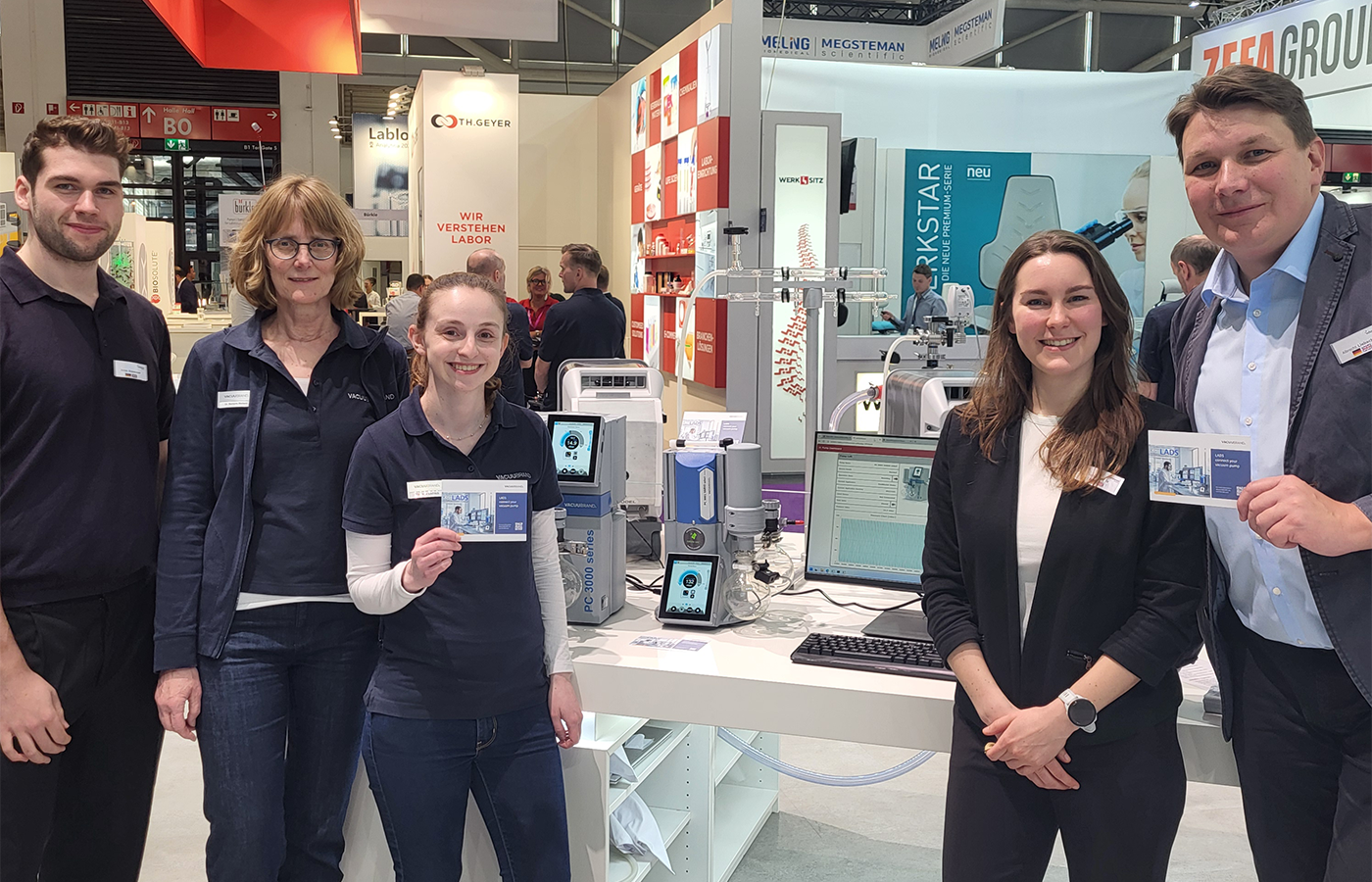
The teams from VACUUBRAND and infoteam Software AG demonstrate LADS OPC UA at the analytica 2026 trade fair.
© infoteam Software AG
Countless different laboratory devices, numerous software systems – and a huge integration gap in between. For years, the lack of standardized interfaces was considered the biggest risk factor in laboratory digitization. Today, thanks to open standards like LADS OPC UA, users can focus on what really matters: functionality instead of integration, transparency instead of Excel spreadsheets, higher sample throughput instead of manual work. Together, infoteam Software AG and VACUUBRAND demonstrate how simple it can be in practice. In this interview, Albrecht Liebscher explains how laboratories can start with an example process, see quick results – and become empowered to implement digital solutions themselves.

Albrecht Liebscher, Senior Key Account Manager Life Science
© infoteam Software AG
From programmer to pioneer for open standards
How did you get into laboratory digitization?
Albrecht Liebscher: I've been with infoteam Software AG for almost 26 years and have a computer science background. For many years, I programmed myself and led projects, from building automation to medical technology. I came to laboratory digitization from the highly regulated medical sector. We created the middleware platform zenLAB®, which acts as a bridge between laboratory devices and higher-level software systems. Today I'm a Senior Key Account Manager, but at heart I'm still a technician who likes to quickly try things out.
How did LADS OPC UA come into play?
Albrecht Liebscher: I've been focused on this topic for about four years now, so I've been there from the beginning. The new communication standard makes it much easier for us to integrate laboratory devices because everyone speaks a common language – whether in regulated environments, industry, or research. I try to inspire device manufacturers and laboratory operators to embrace LADS OPC UA – because I firmly believe that open standards are the future of laboratory digitization.
LADS OPC UA for laboratory digitization
What problems existed with device integration – and how does LADS OPC UA solve them?
Albrecht Liebscher: Device connectivity had the highest risk rating in our projects. There are tens of thousands of laboratory devices on the market with digital interfaces and countless software systems used in laboratories. In the past, we first checked: Does the device even have an interface? Then we tried to get the specification for that interface – which not every manufacturer would provide. This created high overhead for us as integrators: special drivers, individual communication paths, sometimes even additional hardware.
Today, we increasingly work with standardized information models and communication structures. This means we can integrate across manufacturers without starting from scratch every time. Connectivity no longer has the highest risk rating. If a customer sent me a requirement today to integrate hundreds of VACUUBRAND vacuum pumps, I'd say 'No problem, we'll do it.' Because LADS OPC UA is an open standard that all parties can rely on: device manufacturers, integrators, and laboratory operators.
What concrete benefits does this bring to laboratory operators?
Albrecht Liebscher: For customers, it means faster integration of new devices, lower engineering effort, and therefore lower costs. You can scale the entire system much better and integrate or replace devices in the same way a second or third time.
Strategically, customers gain freedom of choice: They can select devices 'best-of-breed' – not based on integrability, but on quality and functionality. Switching devices no longer requires software adjustments.
And especially in regulated environments, this is important: LADS OPC UA is based on an IEC standard and has built-in cybersecurity. This is becoming increasingly important, especially with the Cyber Resilience Act in mind. In GAMP* environments, we no longer need to separately validate the communication – the design is already compliant.
* Good Automated Manufacturing Practice, a structured and risk-based approach to validating and maintaining computerized systems in the pharmaceutical industry.
Integration platform zenLAB®
zenLAB is the middleware from infoteam Software AG that acts as a bridge between laboratory devices and higher-level software systems. It was developed from the experience that digitization projects repeatedly require the same building blocks: for example, device integration, user management, audit trail – and the ability to connect higher-level systems like LIMS, ELN, or ERP. zenLAB works like a toolbox. There are proven "building blocks" that are assembled according to requirements – including custom components when needed. For device communication, zenLAB today relies on open standards like LADS OPC UA, REST, or SiLA.
Live demonstration of LADS OPC UA
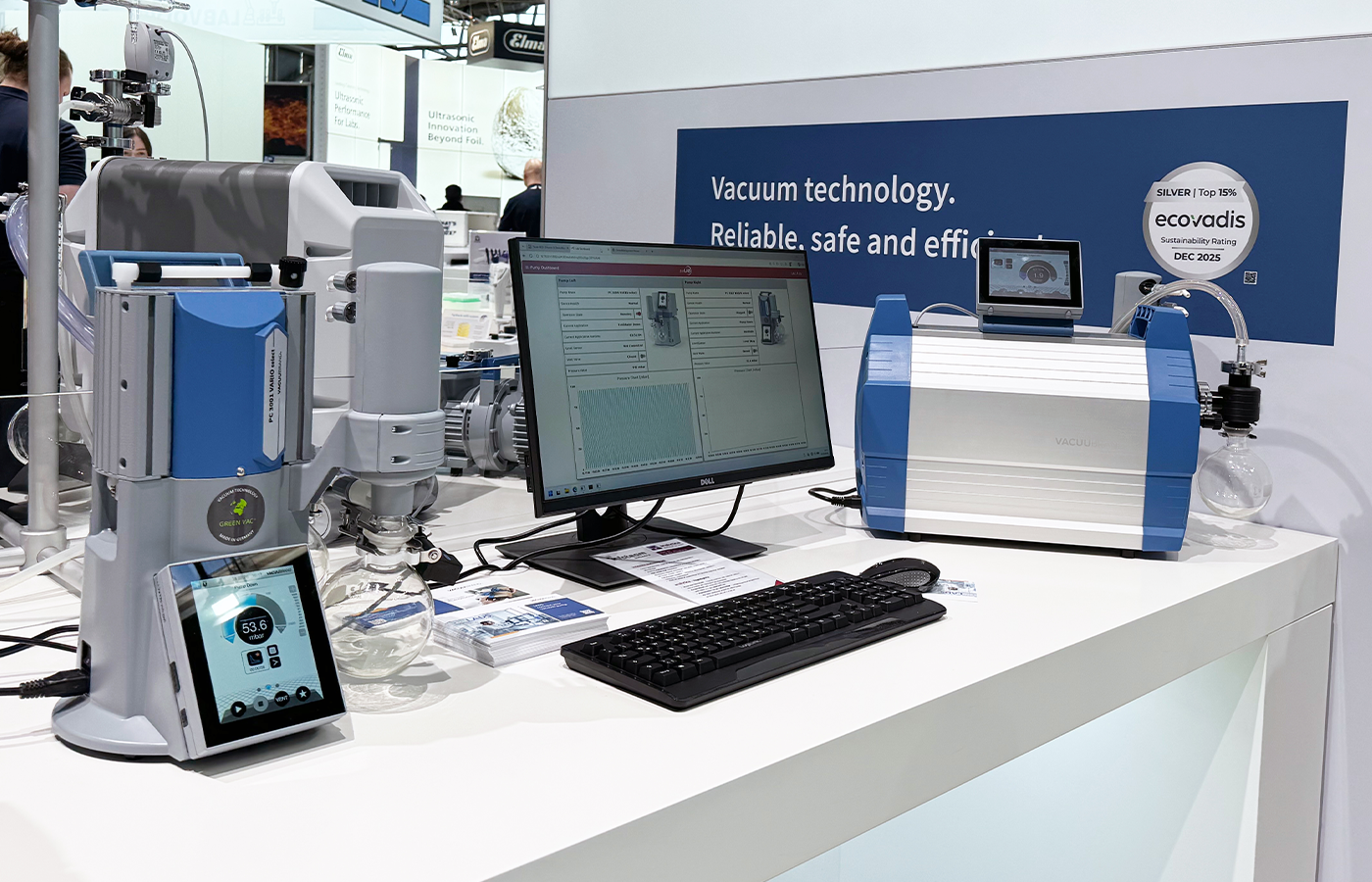
The values from two LADS-ready vacuum pumps are displayed live on the dashboard using the zenLAB® middleware on a PC.
© VACUUBRAND
What is the significance of the collaboration with VACUUBRAND?
Albrecht Liebscher: The development teams from infoteam Software AG and VACUUBRAND have known each other for a while from the LADS OPC UA hackathons. These are intensive, usually two-day events where device manufacturers, software providers, and sometimes laboratory operators come together to work on concrete technical solutions. The vision of an open, interoperable laboratory unites all participants.
This led to the idea of demonstrating together at the analytica 2026 trade fair how modern laboratory devices can be integrated simply and seamlessly. VACUUBRAND provided a LADS-ready vacuum pump, we provided the zenLAB middleware – the perfect combination for a live demo at the booth.
What reactions did you experience at the analytica trade fair?
Albrecht Liebscher: We wanted to show how simple device integration really is in laboratory digitization: A colleague from VACUUBRAND and I connected the vacuum pump right there on site and started our middleware. Within a short time, visitors could see real-time vacuum values and operating states change on the open source dashboard on a PC. All without proprietary software. That was quite impressive.
The response was clear: Customers now actively approach us and say: 'We've heard that you can show us how easy LADS integration is.' It's truly a no-code solution: Customers can assemble their own dashboard and display the desired values like vacuum pressure and operating state without needing a developer with specialized knowledge.
Implementation in the laboratory
How realistic is interoperability – especially in laboratories with existing devices?
Albrecht Liebscher: In our customers' laboratories, we're rarely working on a greenfield site with exclusively LADS-ready devices. We're more often in a 'brownfield' – a heterogeneous environment with existing devices and systems. That's exactly why we need a middleware approach like zenLAB that connects both worlds.
For modern devices like VACUUBRAND's vacuum pumps, we use LADS OPC UA directly. Specifically for universities, we're currently developing the zenLAB Research platform. To enable integration of legacy devices, we provide Python scripts that allow universities to build their own OPC UA server. This enables a gradual transition to modernization. The next devices a customer purchases will hopefully natively support a standard interface like LADS OPC UA. This way, they quickly experience the advantage of how simple installation and integration into the digital infrastructure become.
What does a typical integration project look like?
Albrecht Liebscher: We start with an inventory: What devices exist? What interfaces do they have? Which processes should be digitized? Then we select a representative process that occurs frequently and implement it as a pilot.
Ideally, in the end you see: The laboratory has higher sample throughput, documentation overhead has decreased, staff scroll through pre-filled protocols instead of filling them out manually, and they no longer need paper records. After the pilot, we see what the next steps are – and together with the customer, we implement additional processes in the digital infrastructure.
LADS OPC UA for more transparency and convenience
What expectations do your customers have regarding the networking of laboratory devices?
Albrecht Liebscher: Our laboratory customers want more transparency and control over their laboratory environments. Topics like remote monitoring, data availability, compliance, and automation are becoming increasingly important – but especially fewer manual tasks.
However, the people in the laboratory should not feel monitored. They should be supported by systems like an assistant. A key point here is cross-manufacturer networking. We have so many systems in laboratories that do almost the same thing, but deliver data in different structures. Today, laboratory staff are experts at programming Excel macros to convert data between these different systems. Standardizing the language of laboratory devices is an essential step toward true convenience in the digital laboratory.
What other improvements do open standards offer in everyday laboratory work?
Albrecht Liebscher: Of course, the main purpose of a laboratory device is to retrieve laboratory data and analysis results. But there's much more: Asset management, for example – what software version is running on a device? Or maintenance – how often is a device used, is the calibration certificate still current?
With the combination of zenLAB and LADS OPC UA, we can cover these scenarios much better because we get all information directly from the device. This also aligns with the plug & play concept: When a laboratory user connects another device, they don't have to manually maintain information somewhere in a database.
This enables completely new features: A tablet recognizes via location tracking which workstation the user is at and automatically selects the correct vacuum pump. Or they scan a QR code on the pipette – done. And staff are happy when they only need to quickly scroll through the first pages of their test protocol and confirm the recorded data after a visual check. Information like labware used, expiration dates, and calibration certificates are automatically captured and logged in the background.
What role does artificial intelligence play?
Albrecht Liebscher: That's an important topic. Our customers frequently ask what they can do with it. AI supports, for example, process optimization: A system observes the laboratory for a few months and then gives recommendations, such as: 'You could be much more efficient if you moved the storage location for this labware closer to the laboratory – the transport route is your bottleneck.'
But for that, you first need data. With networked devices, you can capture many more data points and deviations: temperature, air pressure, humidity, and so on. This allows you to identify correlations that were previously unclear – for example, statements about reactions or energy consumption.
Practical tips and future perspective
Why must manufacturers, integrators, and users work together?
Albrecht Liebscher: Because this solves a classic chicken-and-egg problem: What must come first? LADS-ready devices so laboratories can select matching software? Or demand from laboratories so manufacturers invest in LADS OPC UA and offer this interface?
We can only resolve this dilemma when all parties work together – in real projects and live showcases like the one with infoteam Software AG and VACUUBRAND at analytica. Only when devices, laboratory applications, and software work together does the visible added value for the digital ecosystem emerge.
That's exactly why the LADS OPC UA hackathons are so important. More and more participants are coming together, even tandems of manufacturers and laboratory customers. This growing community is driving LADS forward – and making the future of laboratory digitization tangible.
What do you recommend to laboratory operators who want to start now?
Albrecht Liebscher: My advice would be to simply start. Don't wait for the perfect overall solution, because it doesn't exist as a ready-made product for any laboratory. Every laboratory is as unique as a fingerprint with its different devices and software systems.
Choose a pragmatic entry point, for example with monitoring critical devices or establishing centralized data collection. You can also start with a non-critical laboratory area and then transfer the learnings to other areas. Of course, it's important to rely on open standards from the beginning. Ask the right questions about devices or software: Does the manufacturer use open standards like LADS OPC UA? Is the data readable and how scalable is the architecture – not just for 50 devices in one laboratory area, but also for multiple locations worldwide?
What is your vision for the coming years?
Albrecht Liebscher: We want to 'enable digital labs' and empower our customers to adapt and develop their processes themselves. Just as today everyone from 10 to 100 years old can operate a smartphone, laboratory digitization should also be accessible to everyone.
That's why we also collect feedback from laboratories and device manufacturers and log it on GitHub, a platform for open collaboration on software projects. So everyone can see 'Yes, that's right, I had that problem too. This is the solution.'
Together with partners like VACUUBRAND, we're actively driving LADS forward – with an open community and new showcases. Former strangers have become friends. That's the power of open standards.
We thank Mr. Albrecht Liebscher and infoteam Software AG for the interview.
